Hiving a Captured Swarm: Nature’s Way of Reproducing a Colony
One of the most fascinating events in beekeeping is watching a swarm establish a new home. It is one of those moments that reminds you just how organized, instinctive, and remarkable a honey bee colony can be.
A swarm is the natural way a honey bee colony reproduces. When a hive becomes strong and crowded, the old queen leaves with approximately half of the bees to form a new colony. Back in the original hive, the remaining bees raise a new queen and begin rebuilding their population. Through this process, one strong colony can become two thriving colonies.
The videos in this post document the journey of a swarm I recently captured at Joy Haven Farm and successfully established at the Shady Grove Road Blueberry Patch.
The first video shows the swarm trap while it was being actively scouted by bees searching for a potential new home. Scout bees inspect possible nesting sites and communicate their findings to the swarm before the colony makes its final decision. Seeing that activity around a trap is always exciting because it means the bees are seriously considering moving in.
The bees checking out the swarm trap.
Once the swarm moved into the trap, I transferred the frames into a permanent hive. During the process, I was fortunate enough to spot the queen. That is always a great sign because it confirms that the colony is healthy, intact, and ready to settle into its new home.
The bees in the swarm trap prior to being placed in the hive.
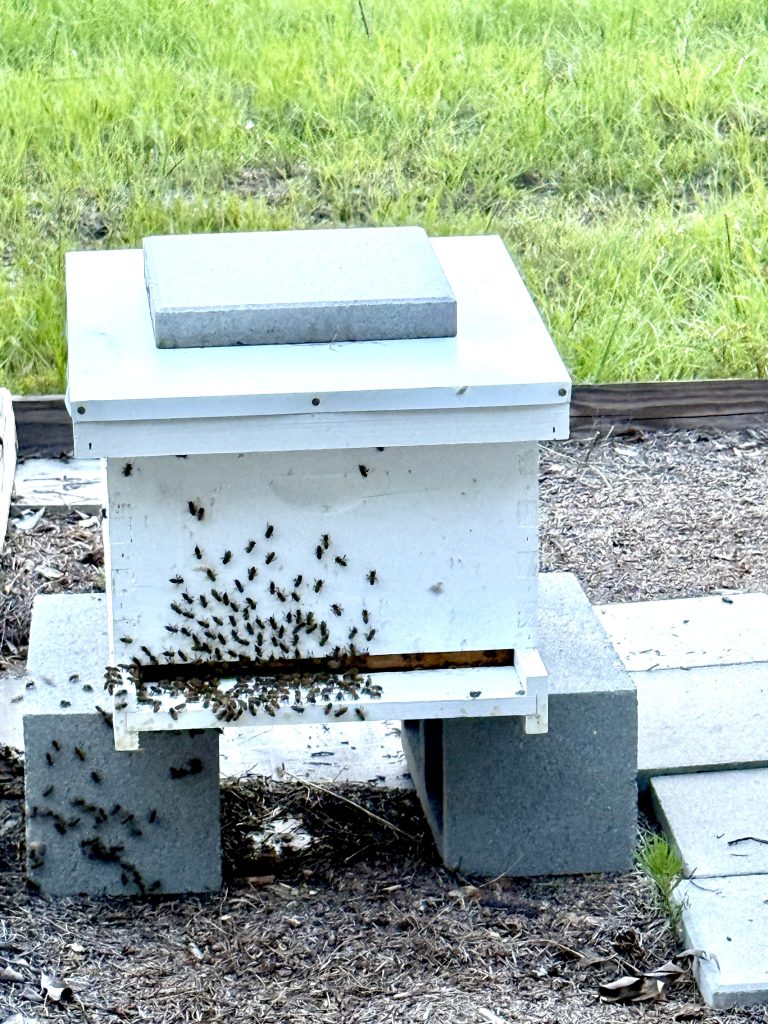
After the bees were placed in their new hive, many gathered at the entrance and began exposing their Nasonov glands. By releasing this pheromone, they signaled to the remaining bees flying nearby that the queen was inside and that this was now their new home. Watching honey bees communicate and organize themselves through pheromones is an incredible reminder of how efficient and cooperative a colony truly is.
The bees in their new home.
This colony was moved from Joy Haven Farm to the Shady Grove Road Blueberry Patch. If the swarm had been established in the existing bee yard near the original swarm trap location, many of the foraging bees may have attempted to return to the trap’s original spot. By moving the colony more than three miles away, the bees no longer recognize the surrounding area and will reorient themselves to their new home. This helps reduce the chance that they will try to return to the previous location.
Capturing and hiving a swarm is always rewarding. Not only does it provide a home for a new colony, but it also gives a front-row seat to one of nature’s most remarkable examples of reproduction, cooperation, and survival.
Welcome to your new home, ladies.
To learn more about why honey bees swarm and how colonies choose a new home, read my related post on honey bee swarming.