
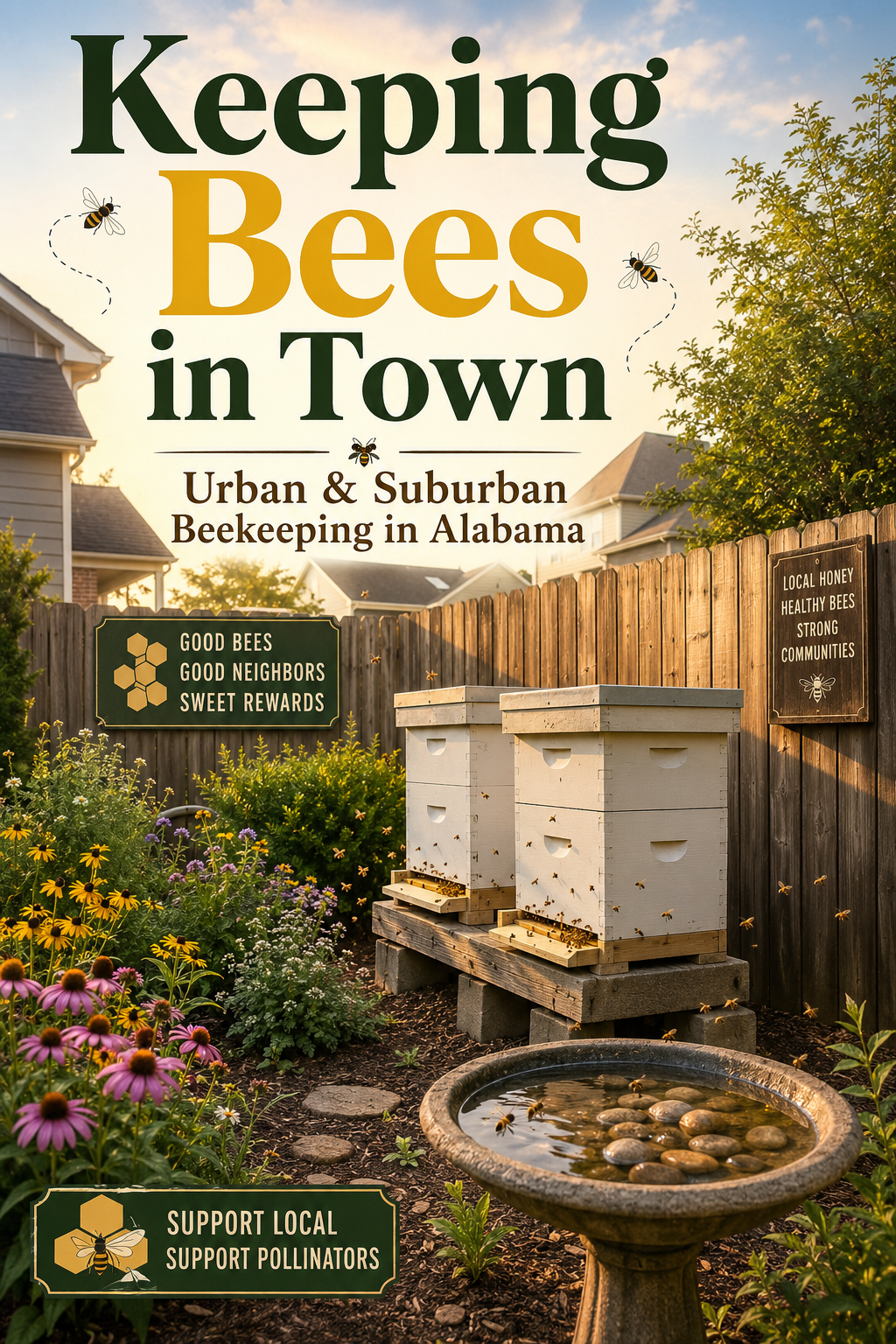
Keeping Bees in Town: A Guide to Urban and Suburban Beekeeping in Alabama
Many people assume beekeeping is only for those who live on large farms or in rural areas. The truth is that honey bees can thrive in urban and suburban environments when managed responsibly. Across Alabama, many successful beekeepers maintain healthy colonies in neighborhoods while maintaining positive relationships with their neighbors.
If you are considering keeping bees in a non-rural area, planning ahead can help prevent problems and create a positive experience for both you and your community.
Being a Good Neighbor
One of the most important aspects of neighborhood beekeeping is understanding that not everyone shares your enthusiasm for honey bees. Some neighbors may have concerns about stings, swarms, or bee activity around their homes.
Open communication can go a long way toward easing these concerns. Consider introducing yourself to nearby neighbors and explaining your plans before installing your hives. Many people have never learned about the important role honey bees play in pollination and food production. A simple conversation can often replace fear with understanding.
A jar of local honey can also be a great ambassador. Sharing honey with neighbors is a thoughtful way to build goodwill and demonstrate the benefits of having honey bees nearby.
Water: An Important Consideration
One of the most common neighborhood beekeeping mistakes is failing to provide a reliable water source.
Honey bees require water throughout the year to cool the hive, dilute stored honey, and feed developing brood. If a convenient water source is not available on your property, bees may seek water elsewhere.
Unfortunately, swimming pools can become very attractive to honey bees because they are often drawn to chlorinated water. Once bees establish a preferred water source, convincing them to switch can be difficult.
To avoid potential conflicts, establish a dependable water source before installing your bees. Birdbaths, shallow tubs with floating corks, and water stations containing stones or gravel all work well.
Understanding Local Regulations
Most Alabama municipalities do not currently have extensive beekeeping regulations. However, Homeowner Associations (HOAs) may have their own restrictions regarding beekeeping activities.
Several Alabama communities, including Anniston, Gadsden, Muscle Shoals, Oxford, Tuscaloosa, and Weaver, have adopted specific beekeeping guidelines. Even if your area does not currently regulate beekeeping, following accepted best practices can help demonstrate responsible management and reduce the likelihood of future restrictions.
Before installing bees, check local ordinances, HOA covenants, and any applicable zoning requirements.
Choosing the Right Hive Location
Hive placement plays a major role in maintaining good neighbor relations.
Whenever possible:
Place hives in a sunny location.
Orient hive entrances toward the southeast.
Avoid directing bee flight paths toward sidewalks, patios, driveways, or other areas where people regularly gather.
Position hives away from high-traffic areas.
As a general guideline, avoid locating hives within 150 to 300 feet of public spaces such as schools, parks, playgrounds, and recreational waterways.
Hives should also be located at least 25 feet from neighboring property lines whenever possible.
If space limitations require placing hives closer than 25 feet to a property boundary, consider installing a six- to ten-foot barrier or privacy fence around the apiary. Barriers encourage bees to fly upward as they leave the hive, reducing interactions with people nearby.
Managing Hive Numbers
The number of colonies appropriate for a property depends largely on available space.
A commonly used guideline is:
Less than ¼ acre: 1 colony
¼ to ½ acre: 2 colonies
½ to 1 acre: 4 colonies
More than 1 acre: 8 or more colonies depending on conditions and management practices
These numbers are not laws in most areas, but they provide a reasonable starting point for maintaining healthy colonies while minimizing impacts on neighbors.
Responsible Hive Management
Good beekeeping practices are especially important in populated areas.
Maintain strong, healthy colonies and address issues promptly. Requeen overly defensive colonies when necessary and monitor regularly for pests and diseases.
In Alabama, beekeepers should also register their colonies annually with the state during the fall registration period.
Providing adequate space, controlling swarming tendencies, and maintaining healthy queens can help reduce issues that may concern neighbors.
Building Positive Community Relationships
Successful neighborhood beekeeping depends as much on relationships as it does on hive management.
Consider:
Sharing honey with neighbors.
Explaining the benefits of pollinators.
Answering questions openly and honestly.
Providing educational information when concerns arise.
Maintaining friendly communication throughout the year.
Most neighbors become supportive once they understand that honey bees are generally focused on gathering nectar and pollen rather than bothering people.
Prepare for the Unexpected
Every beekeeper should have a contingency plan.
Consider how you would respond to:
Severe weather events.
Hive vandalism.
Swarms.
Aggressive colony behavior.
Requests or complaints from neighbors.
Maintaining contact with local beekeeping associations and experienced mentors can provide valuable support when unexpected situations occur.
Some beekeepers may also wish to explore liability insurance options for additional peace of mind.
Final Thoughts
Urban and suburban beekeeping can be rewarding, productive, and beneficial to local pollinator populations. With thoughtful planning, proper hive management, and good communication, honey bees can coexist successfully within neighborhoods throughout Alabama.
By being proactive, respectful, and responsible, beekeepers can help ensure that both bees and neighbors thrive together.
Here are some other topics to help you along your beekeeping journey.