
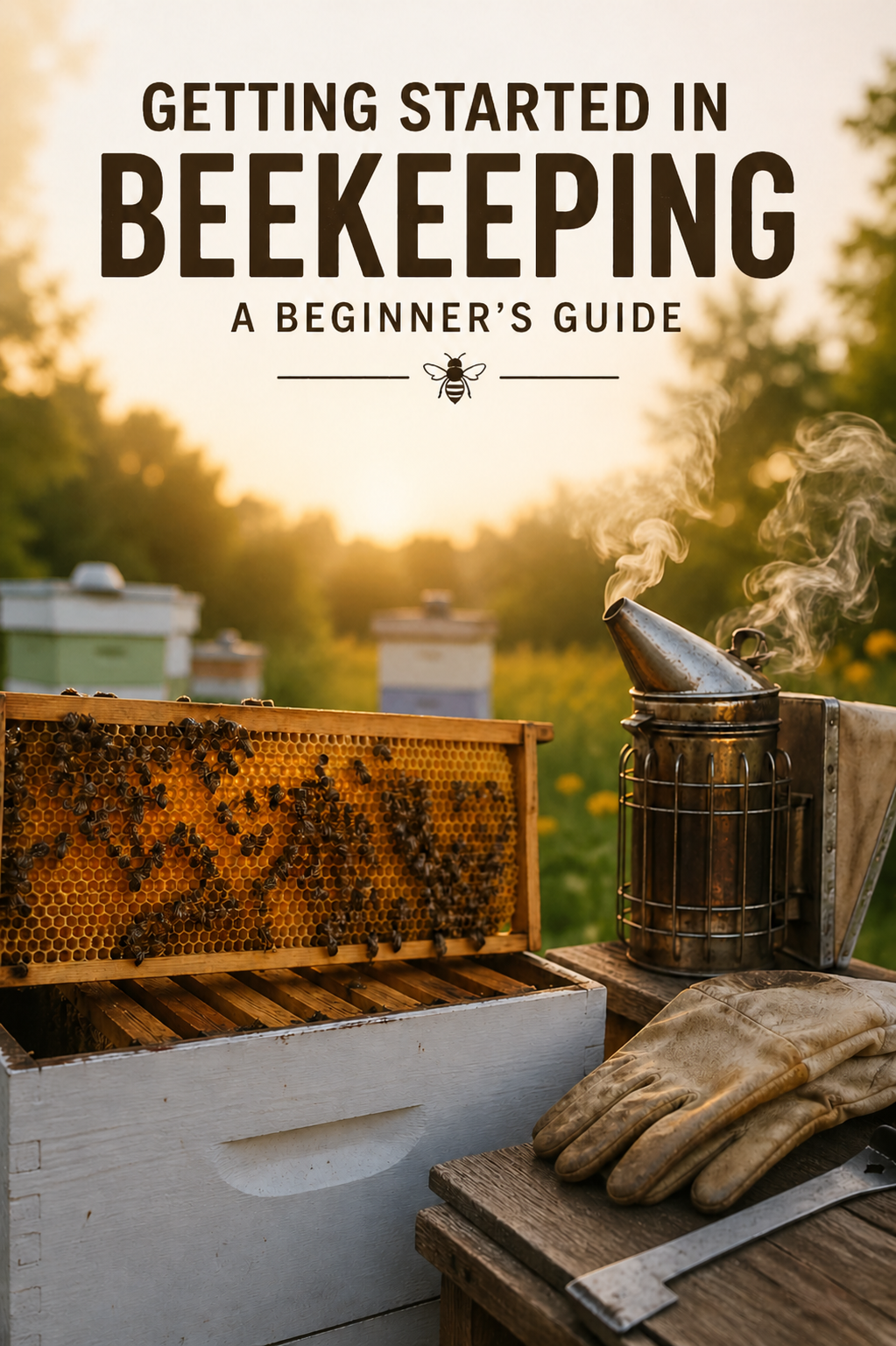
Getting Started in Beekeeping
A Beginner’s Guide to Building a Strong Foundation for Success
By Marty Brunson, MDB Apiaries, LLC
Introduction
Few hobbies combine agriculture, biology, conservation, and food production quite like beekeeping. Whether your goal is to harvest honey, improve pollination in your garden, or simply learn more about one of nature’s most remarkable insects, beekeeping offers a rewarding journey that never stops teaching.
My journey into beekeeping began with a simple curiosity. After reading books and watching videos about the fascinating biology of honey bees, I became captivated by what bees do and, more importantly, why they do it. The more I learned, the more I wanted to experience beekeeping firsthand.
Because I thought keeping bees in my neighborhood would likely create challenges with my homeowners association, I looked for local farmers who might be interested in hosting honey bee colonies. My thought was simple: they would benefit from increased pollination, and I would have a suitable place to establish my apiaries. It turned out to be a win-win partnership that continues today.
What started as two colonies quickly became four by the end of my first year. Four became eight during my second year, and by my third year I was managing twenty-three colonies. Today, MDB Apiaries maintains twenty-five colonies across two apiaries in Macon County, Alabama.
Along the way, I’ve discovered that successful beekeeping isn’t something you do alone.
Whenever I’ve encountered a challenge—whether it involved a queen problem, swarming, pests, or simply learning a better management technique—experienced beekeepers have generously shared their knowledge and advice. The willingness of beekeepers to help one another is one of the greatest strengths of our community, and it has played a major role in my own success.
If you’re considering becoming a beekeeper, I hope this guide helps you begin your journey with realistic expectations and a solid foundation. The recommendations that follow are the same advice I would give anyone preparing to purchase their very first hive.
Why Honey Bees Matter
Before I ever owned a hive, I thought honey was the primary reason people kept bees.
I soon learned that while honey is certainly a wonderful product, pollination is arguably the honey bee’s greatest contribution to agriculture.
Every day, honey bees visit thousands of flowers collecting nectar and pollen. As they move from flower to flower, they transfer pollen that enables many plants to produce fruits, vegetables, nuts, seeds, and berries. Many of the foods we enjoy every day depend, at least in part, on insect pollination.
Honey bees are only one of many important pollinators. Native bees, butterflies, moths, beetles, flies, hummingbirds, and bats all contribute to healthy ecosystems. Each species plays a unique role in supporting agriculture and natural habitats.
What makes honey bees especially valuable is a behavior known as flower constancy.
During a single foraging trip, a worker bee typically visits only one species of flowering plant. Rather than moving randomly from one flower to another, she focuses on a single crop before returning to the hive. This results in much more efficient pollination because pollen is consistently transferred between flowers of the same species.
Another advantage is that honey bees can be managed and transported.
Every spring, commercial beekeepers move millions of colonies to California to pollinate almond orchards. After the almond bloom, many of those same colonies continue across the country pollinating blueberries, apples, cucumbers, melons, pumpkins, and numerous other crops before returning home.
Even here in Alabama, honey bees play an important role in pollinating home gardens, orchards, berry farms, and countless wildflowers that support healthy ecosystems.
Every time I watch thousands of bees leave one of my hives, I’m reminded that they’re doing much more than making honey. They’re helping support farms, wildlife, and food production every single day.
Start with Education and Community
If I could offer only one piece of advice to someone thinking about becoming a beekeeper, it would be this:
Don’t buy bees first. Learn first.
It’s easy to get excited after watching videos online or seeing someone harvest honey. Before long, you’re shopping for equipment and wondering where to order bees.
I understand that excitement because I felt it myself.
Looking back, however, the best investment I made wasn’t my hive equipment or even my first colonies.
It was education.
Before purchasing bees, I strongly encourage every prospective beekeeper to:
- Join a local beekeeping association.
- Take a beginner beekeeping course.
- Find an experienced mentor.
- Attend workshops, field days, and conferences whenever possible.
Nothing replaces hands-on experience.
Watching an experienced beekeeper inspect a hive teaches lessons that simply can’t be learned from a book or video. You’ll see how they handle frames, recognize eggs and brood, evaluate the queen’s performance, identify healthy colonies, and recognize problems before they become serious.
A local beekeeping association also connects you with people who understand your area’s climate, nectar flows, seasonal management practices, and common challenges. Advice that works well in another part of the country isn’t always appropriate for Alabama, making local experience especially valuable.
Perhaps most importantly, you’ll build relationships with people who are willing to answer questions when something unexpected happens—and eventually, something will.
Every beekeeper has opened a hive and wondered, “What are my bees doing now?”
Having someone you can call makes all the difference.
One thing I’ve learned is that even the most experienced beekeepers continue learning. They attend classes, participate in conferences, exchange ideas with other beekeepers, and constantly improve their management practices.
That willingness to keep learning is one of the characteristics that separates good beekeepers from great ones.
Education doesn’t end after your first class or your first season.
In many ways, that’s when the real learning begins.
Choosing Your Hive Setup
One of the first decisions every new beekeeper faces is choosing what type of hive to use. If you spend much time researching online, you’ll quickly discover there are countless opinions about hive styles, frame sizes, and equipment. Every beekeeper seems to have a favorite.
My advice is simple—don’t overcomplicate your first decision.
For most beginning beekeepers, I recommend using a standard Langstroth hive. It is the most widely used hive in the United States and offers several advantages. Equipment is readily available, replacement parts are easy to find, and most educational resources and experienced mentors use this system. Choosing a common hive style also makes it easier to get advice because you’re using the same equipment as most of the beekeepers around you.
Other options are available and may be better suited for certain situations. Horizontal hives, sometimes called long hives, are an excellent choice for individuals who prefer to manage bees while seated or who cannot comfortably lift hive boxes that may weigh 30 to 45 pounds when full of honey. You’ll also find insulated and plastic hive systems that perform well under certain conditions.
As a beginner, however, I recommend keeping things simple. Learning how to manage honey bees is challenging enough without also trying to learn a less common hive system. Once you gain experience, you’ll have plenty of opportunities to experiment with other equipment if you choose.
Selecting an Apiary Location
Where you place your hives is just as important as the equipment you purchase.
A good apiary location should receive morning sunlight, have protection from excessive afternoon heat and strong winds, and provide easy access for routine inspections and maintenance. Colonies also need access to a continuous source of nectar and pollen throughout the growing season. A diverse landscape containing flowering trees, gardens, wildflowers, pastures, and agricultural crops will generally provide better forage than an area with only one major bloom period.
Bees also require a dependable source of water. They use water to cool the hive, feed developing brood, and regulate the colony’s temperature. If you don’t provide one, they’ll simply find their own—which may be your neighbor’s swimming pool, birdbath, or pet’s water bowl. A shallow container with clean water and floating corks, pebbles, or sticks provides a safe place for bees to land while drinking.
If you plan to keep bees in a neighborhood or subdivision, research local ordinances and homeowners association rules before purchasing bees. Some communities have restrictions on hive placement or the number of colonies permitted on a property.
Just as important is building a positive relationship with your neighbors. Many people have never seen a managed honey bee colony and may simply have questions or concerns. Taking the time to introduce yourself, explain the importance of honey bees, and answer questions often helps people become comfortable with your new hobby. Sharing a jar of honey after your first harvest doesn’t hurt either.
Why I Recommend Starting with Two Hives
One of the questions I hear most often is:
“How many hives should I start with?”
The answer surprises many people.
I almost always recommend two.
Although buying one hive may seem less expensive, two colonies actually make learning much easier.
With only one hive, it’s difficult to know whether what you’re seeing is normal. With two colonies, you immediately have something to compare. If one colony is thriving while the other is struggling, you’ll recognize that something deserves a closer look. Comparing brood patterns, food stores, bee populations, and queen performance helps you develop confidence much more quickly.
Starting with two colonies also gives you management options. If one colony becomes weak, you may be able to strengthen it by sharing brood or resources from the stronger colony when appropriate.
Perhaps most importantly, starting with two colonies helps reduce discouragement. Every beekeeper eventually loses a colony. It’s simply part of beekeeping. If your only hive dies, it’s easy to become discouraged and give up. When you have two colonies, you still have bees to learn from while you determine what happened to the other hive.
For most beginners, the additional investment is well worth the educational value it provides.
Choosing a Reputable Bee Supplier
The quality of your bees is one of the biggest factors influencing your first year’s success.
Whenever possible, purchase bees from a reputable local supplier. In Alabama, look for suppliers whose apiaries are inspected by the Alabama Department of Agriculture and Industries. While no inspection can guarantee that every colony is completely free of pests or diseases, regular inspections demonstrate a commitment to maintaining healthy colonies and following sound management practices.
Buying locally offers several additional advantages.
Your bees experience less transportation stress, are already adapted to Alabama’s climate and nectar flows, and you’ll often have the opportunity to ask questions directly from the beekeeper who raised them.
Perhaps the greatest benefit is knowing exactly who to call if you have questions after bringing your bees home.
A reputable supplier wants you to succeed because their reputation depends on producing healthy colonies and satisfied customers.
Don’t hesitate to ask questions before making your purchase. How long has the queen been laying? How are Varroa mites monitored? Has the colony been inspected? Good suppliers are usually happy to discuss their management practices because they take pride in producing quality bees.
Understanding the Difference Between Package Bees and Nucleus Colonies
One of the first decisions you’ll make is whether to purchase package bees or a nucleus colony, commonly called a nuc.
Both can become productive colonies, but they begin very differently.
Package Bees
A package typically contains about three pounds of worker bees—approximately 10,000 bees—and a separately caged, mated queen. After installation, the workers must accept the queen, release her from her cage, build comb, and establish the colony from scratch.
Packages generally cost less than nucs and are widely available in early spring. However, they also require more management during the first several weeks. Because the colony must build all of its comb before the queen has room to lay eggs, development is slower. There is also the possibility that the queen may not be accepted or that the colony could abscond after installation.
Nucleus Colonies (Nucs)
A nucleus colony is a small, established colony that usually contains four or five frames with:
- A proven laying queen
- Worker bees of all ages
- Eggs, larvae, and capped brood
- Drawn comb
- Honey and pollen stores
Instead of starting from scratch, the colony is already functioning. The queen has demonstrated that she is laying well, young bees are emerging regularly, and the colony simply continues growing after being transferred into your equipment.
Although nucs generally cost more than packages, I believe they offer beginning beekeepers the greatest opportunity for success. Colonies develop more quickly, queen acceptance is no longer a concern, and under favorable conditions, a nuc may even produce surplus honey during its first season.
When someone asks which option I recommend for their first bees, my answer is almost always the same:
If your budget allows, purchase healthy nucleus colonies from a reputable local producer.
The additional investment often pays for itself through a smoother and more enjoyable first year of beekeeping.
What Does a Beekeeper Actually Do?
One of the biggest misconceptions about beekeeping is that it’s simply putting bees into a hive and harvesting honey at the end of the summer.
The reality is very different.
Successful beekeeping is about observation, management, and solving problems before they become serious.
Today’s honey bees face challenges their ancestors never encountered. Varroa mites, diseases, changing weather patterns, pesticides, and periods of limited nectar all place additional stress on colonies. A beekeeper’s role is to recognize these challenges and help healthy colonies remain healthy.
That begins with regular hive inspections.
During the spring, when colonies are growing rapidly and preparing for the year’s primary nectar flow, I typically inspect my hives every seven to ten days. Colonies can change dramatically in a single week, and regular inspections allow me to recognize developing issues before they become major problems.
During late summer, fall, and winter, inspections become less frequent—usually every two to three weeks, depending on weather conditions and the needs of the colony.
Every inspection has a purpose. I look for evidence that the colony is healthy and progressing normally by evaluating:
- The queen’s presence and brood pattern.
- Eggs and young larvae that indicate the queen has been laying recently.
- Population growth and overall colony strength.
- Food stores and available space.
- Signs of swarming.
- Varroa mite levels and other pests.
- Evidence of disease or abnormal brood.
No two hive inspections are exactly alike.
Every colony has its own personality. Some are calm and gentle while others are more defensive. Some colonies grow rapidly while another, sitting only a few feet away, develops much more slowly.
Those differences are part of what makes beekeeping so fascinating.
Many people are surprised to learn that harvesting honey is actually one of the smallest parts of beekeeping. Most of the work takes place long before the first frame of honey is ever removed from the hive. Healthy colonies produce honey because they’ve been managed well throughout the year.
What Does It Cost to Get Started?
One of the first questions prospective beekeepers ask is, “How much will it cost?”
The answer depends on the equipment you choose and whether you purchase new or used equipment, but for someone beginning with two colonies, a realistic budget is approximately $700 to $1,200.
Typical expenses include:
Hive Equipment
- Complete hive bodies
- Frames and foundation
- Bottom boards
- Inner covers
- Outer covers
Bees
- Package bees or, preferably, nucleus colonies (nucs)
Protective Equipment
- Bee suit or jacket
- Veil
- Gloves
Basic Tools
- Smoker
- Hive tool
Education
- Local beekeeping association membership
- Beginner beekeeping course
- Workshops and conferences
While it is possible to reduce costs by purchasing used equipment or building your own woodenware, always be certain used equipment is free of disease before introducing it into your apiary.
Think of your first-year expenses as an investment rather than simply a purchase. Quality equipment, healthy bees, and good education provide the foundation for years of enjoyable beekeeping.
Be a Good Neighbor
Every beekeeper serves as an ambassador for the beekeeping community.
Whether your hives are located on a farm or in a residential setting, responsible beekeeping includes being considerate of the people around you.
Whenever practical:
- Place hives away from property lines and heavily traveled areas.
- Use shrubs or fences to encourage bees to fly above head height.
- Provide a dependable water source.
- Avoid keeping more colonies than your property can adequately support.
- Maintain healthy colonies through regular inspections and responsible mite management.
If your neighbors have questions, take the time to answer them. Many people simply don’t understand honey bees or how they differ from wasps and yellow jackets.
One of the easiest ways to build goodwill is to share your honey. A small jar of local honey often becomes the beginning of a great conversation about pollinators and the importance of beekeeping.
Responsible beekeepers not only care for their bees—they help create positive experiences that encourage others to appreciate them as well.
Getting Started Checklist
Thinking about becoming a beekeeper? Follow these simple steps to build a strong foundation for success.
□ Learn the basics of honey bee biology.
□ Join your local beekeeping association.
□ Take a beginner beekeeping course.
□ Find an experienced mentor.
□ Purchase your equipment before your bees arrive.
□ Buy healthy bees from a reputable local supplier.
□ Consider starting with nucleus colonies (nucs).
□ Begin with two hives rather than one.
□ Continue learning through workshops, conferences, and experienced beekeepers.
□ Enjoy the journey.
Final Thoughts
When I brought home my first two colonies, I thought I was starting a hobby.
Looking back, I realize I was beginning a lifelong journey.
Since then, I’ve celebrated successful honey harvests, learned valuable lessons from setbacks, and developed an even greater appreciation for the remarkable biology of honey bees. Every season has taught me something new, and every challenge has made me a better beekeeper.
One lesson has remained constant throughout my journey: no one becomes a successful beekeeper alone.
The generosity of experienced beekeepers who were willing to answer questions, share ideas, and offer encouragement has been invaluable. Their willingness to help is one of the things that makes the beekeeping community so special.
If you’re thinking about becoming a beekeeper, don’t worry about knowing everything before you begin.
None of us did.
Start with education.
Find a mentor.
Ask questions.
Learn from your bees.
Most importantly, enjoy the journey.
You may begin beekeeping because you want fresh local honey, but you may discover, as I did, that the real reward is becoming part of a lifelong community dedicated to learning, stewardship, and the remarkable world of honey bees.
Continue Your Beekeeping Journey
Now that you’ve learned the basics of getting started in beekeeping, your next step is deciding where your bees will live and how to set up your apiary responsibly.
 Read: Keeping Bees in Town: Urban and Suburban Beekeeping in Alabama
This guide covers hive placement, neighborhood considerations, water sources, local regulations, and practical tips for successfully keeping bees in residential areas.